
Let’s be honest about something that’s been hiding in plain sight.
Every year, organizations pour their training budgets into leadership development. We build programs, send managers to workshops, and coach directors on how to lead with vision. But here’s the problem: many organizations treat leadership skills like a privilege reserved for the few rather than a capability that should be shared by many. This is gatekeeping. And this thrifty approach can cost us. Because the problem isn’t just who you train; it’s how you think about growth.
The old corporate ladder is dead. Today’s careers aren’t a direct climb: many of us move sideways, diagonally, and sometimes pause to deepen expertise. So rather than seeing development pathways as a ladder, consider them more a lattice—a dynamic model that reflects how people actuallyevolve.
Because if you continue to commission training as if everyone’s climbing the same vertical path, you risk ignoring your quiet experts, your cross-functional connectors, and your culture carriers. These are the people who lead through influence, not title. And you know what? They deserve your commitment to their future, too.
Some employees don’t want to manage teams. They want to be brilliant at what they do. Others take unconventional paths into leadership. If we only invest in those climbing straight up, we miss the richness of the lattice—and the diverse leadership empowerment it holds.
The X Model of Engagement: Contribution Meets Satisfaction
One powerful framework for understanding the value of development across all functions is the X Model of Engagement. It’s a simple but powerful idea: when employees are both contributing at a high level and feeling satisfied in their roles, everyone wins. That’s where people thrive. But you don’t get there by only investing in a handful of managers. You get there by equipping everyone with the tools to lead from where they are.
The X Model of Employee Engagement
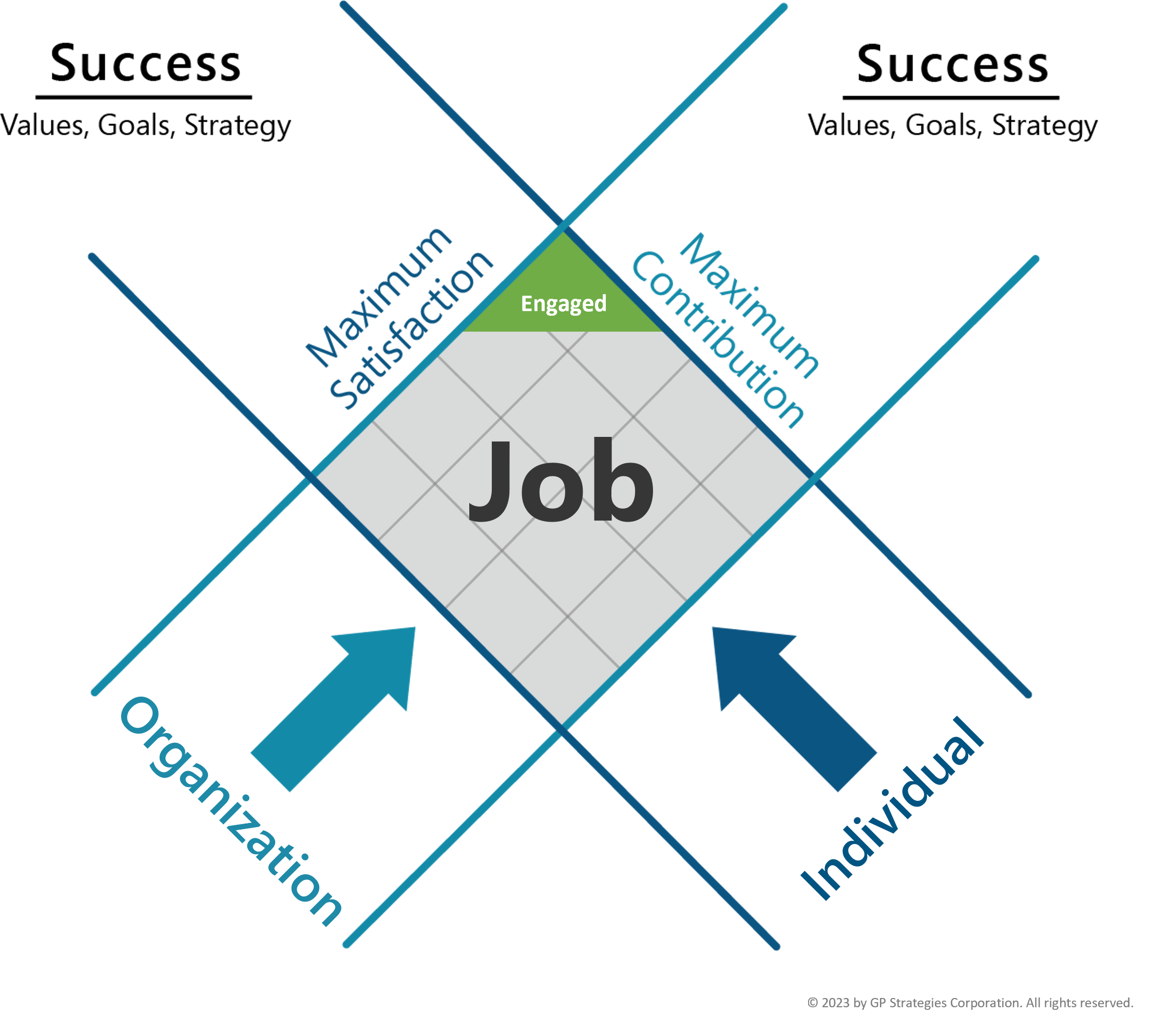
When individual contributors learn how to give feedback, navigate difficult conversations, and align their work with broader goals, they stop “just doing their job.” They start leading through expertise. And that’s where culture shifts.
Gallup’s research shows that employees who feel they’re learning and growing are significantly more likely to stay. And when we democratize access to leadership skills, we create a shared language and mindset that strengthens culture, boosts retention, and drives performance.
This isn’t a nice-to-have. It’s a strategic imperative.
Training sends a powerful message: We see you. We believe in you. You matter here. That message builds confidence, unlocks potential, and fuels innovation from every corner of the organization, and means you get to build a workforce that’s diverse, resilient, and ready for the future.
A Cost-Effective Option for Inclusive Development
So how do we make inclusive development a reality, especially when budgets are tight and time is limited?
At GP Strategies, we have always stood by our digital learning libraries, which offer scalable, translatable, point-of-need training for all employee levels. We have, however, recently launched our instructor-led Get Future Ready catalog, featuring flexible, practical training sessions that fit into busy schedules.
This new offering focuses on the foundational skills and human-centered experiences designed for your individual contributors to spark real change, both in their own practice and within your organizational performance. The catalog covers what used to be called “soft skills.” But let’s be real—these are power skills: the capabilities that shape culture and drive transformation.
Topics include:
- Taking accountability
- Building networks
- Embracing change and adaptability
- Harnessing mental resilience
- Managing stakeholders
- Crafting and sharing compelling stories
Building a Culture of Collective Growth
Being future-ready means including everyone in the journey. If you only invest in a few leaders and they leave, your organization becomes vulnerable. But if you build capability across the board, you’re future-ready. Because when every employee is empowered to grow and contribute from where they are, the entire organization becomes stronger, more agile, and better prepared for whatever comes next.
So ask yourself: Are you building a leadership culture that includes everyone—or just a few? Because the future doesn’t wait for title changes.
About the Authors